
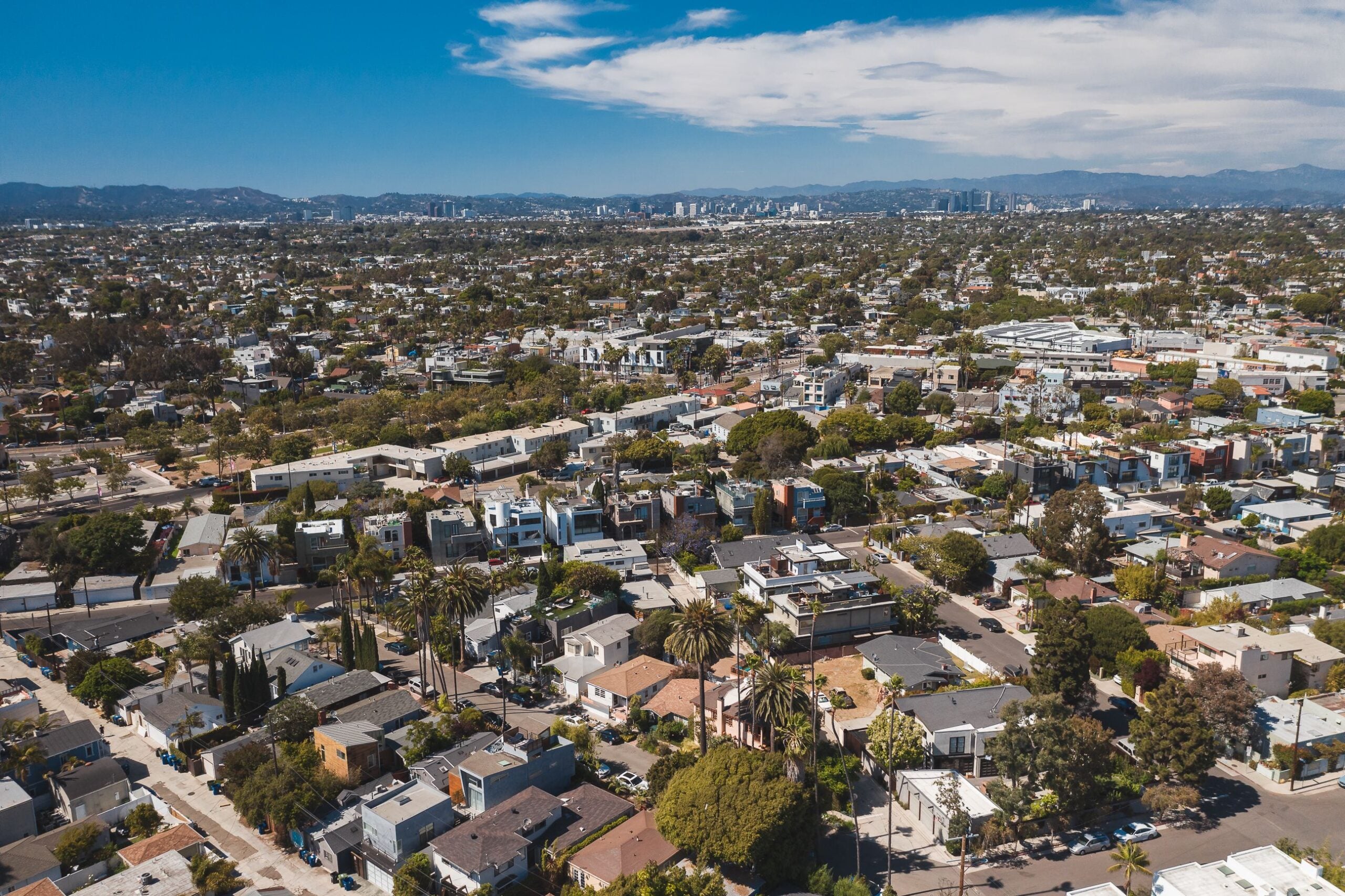
A Southern California Lender That Knows the LA Market
We’re a hard money lender in Los Angeles County, and we move fast because in this market speed is leverage. When a deal comes up, the investor who can close in days, not weeks, is the one who locks it up.
As a Southern California-based lender, BEST Lending Co lends direct. We fund with our own capital, which means no broker in the middle, no committee, and no lender who thinks Highland Park and Palmdale are the same market.
What a Fix and Flip Loan Looks Like in Los Angeles County
A fix and flip loan is short-term, asset-based financing, secured by the property rather than your W-2. Where a bank leans on your credit and income, we lean on the deal: what you’re buying it for, what it costs to fix, and what it’s worth when you’re done. Your experience matters too, but the numbers come first.
Our fix and flip terms:
| Term | What We Offer |
|---|---|
| Rates | 9% to 12%, based on your experience level |
| Leverage | Up to 90% of purchase, 100% of rehab |
| Loan size | $125,000 to $5,000,000 |
| Term | 6 to 24 months |
| Prepayment penalty | None |
| Interest | Charged as disbursed, not on the full balance |
| Closing | 5 to 10 days |
Experience is rewarded here. A proven track record gets you better leverage and better pricing than a first-time flipper, and recent projects carry the most weight. That’s not a policy we hide; it’s how the deal actually gets underwritten.
That “interest as disbursed” line matters more in an expensive market like LA, where homes are taking longer to sell than they were a year ago, and you may be carrying a property for months. You draw the rehab funds in stages as the work gets done, and pay interest on each piece only once it’s released, not on the full amount from day one.
The Los Angeles County Numbers Investors Are Actually Working With
As of mid-2026, the countywide median sits right around $905,000, essentially flat year over year. What’s changed is speed: homes are taking longer to sell, with time on market running well past a month, and the bidding-war urgency is gone. Buyers who are still active have more options and more leverage than they’ve had in years, especially on anything that’s been sitting.
That shift matters more than the price. In a slower market, a thin rehab budget or an inflated ARV doesn’t just cost you upside, it can trap you. The property sits, the carrying costs stack up, and the comps that were supposed to support your exit soften underneath you. This is a market that punishes optimistic underwriting.
And LA isn’t one market. It’s 88 cities and hundreds of neighborhoods, spread across coastline, hillside, valley, and desert, each with its own pricing, its own permitting authority, and its own buyer. The countywide median is close to meaningless as a working number.
Where investors are actually finding margin right now:
Northeast LA. Highland Park, Glassell Park, Cypress Park, and Atwater Village continue to draw flippers and value-add buyers. Older housing stock, strong rental demand, and pricing that still leaves room, with Cypress Park sitting a tier below its neighbors.
West Adams and the Mid-City corridor. One of the county’s most active value-add markets, with early-1900s Craftsman and Tudor stock and zoning flexibility that supports lot splits and ADU additions.
The San Fernando Valley. Van Nuys, North Hollywood, and the surrounding Valley are where the ADU math works best, larger lots with room to add units, and rental demand near the studios and transit.
Echo Park and Silver Lake. Higher entry pricing, but consistent demand and strong potential for multifamily and ADU value-add plays.
The Gateway and South Bay cities. Long Beach, Inglewood, and the surrounding cities offer more approachable pricing with real buyer and renter depth underneath.
Three Things That Kill LA Flips (And How We Underwrite Around Them)
Permits, and the post-fire backlog. LADBS plan check runs roughly 8 to 12 weeks for standard structural work, and that’s before correction cycles. Since the January 2025 wildfires, the system is carrying an enormous rebuild caseload on top of ADU applications that are up more than 200% year over year, all with a plan-check staff that never fully recovered from the pandemic. New 2026 state code requirements added review time on top of that. If your loan term assumes a 90-day flip and your permit sits for four months, no amount of contractor hustle closes that gap. We size terms with real LA permitting timelines in mind, and every city in the county runs its own process.
Insurance and wildfire exposure. After 2025, this is no longer just a cost line, it’s a closing risk. In hillside and fire-zone submarkets, wildfire exposure can make insurance hard to secure at all, and a deal that can’t get insured is a deal that can’t close. We flag it during underwriting rather than at day nine of a ten-day close.
Labor cost and market softness together. Construction labor in LA runs well above national averages, so a rehab budget built off a national cost-per-square-foot calculator will be short. In a market that’s already slow, an underfunded rehab is how a good deal turns into a stalled one. We’d rather pressure-test the rehab budget during underwriting than watch it run out in month four.
Recently Funded in Los Angeles County
These are real projects we financed, with the numbers our borrowers actually worked with.
Long Beach · Purchase $1,000,000 · Rehab $225,000 · Cosmetic-to-moderate renovation · Projected value $1,525,000 · Sold for $1,600,000, $75,000 over · About three months, purchase to sale
Pico-Robertson, Los Angeles · Purchase $1,410,000 · Rehab $877,000 · Duplex-to-fourplex conversion with two new ADUs · $2,033,000 loan · Projected ARV $3,000,000 · A density play on a 5,677 SF lot, taking the property from two units to four, with the borrower holding as a long-term rental
Santa Monica · Purchase $1,417,500 · Duplex renovation with rear-lot new construction · $2,235,000 original loan, later refinanced into a larger facility to fund the remaining build · Projected ARV $2,950,000 · Two renovated units plus a new single-family home and a six-bedroom ADU, again taking two units to four
Notice the range: a three-month single-family flip that beat its projection, and two multifamily density plays that add real units to well-located lots. That’s the LA market as it actually is in 2026, and it’s the kind of deal we fund.
Why Investors Use Us Instead of a Bank
| BEST Lending Co | Traditional Bank | |
|---|---|---|
| Decision drivers | The property and the deal | Your income and credit history |
| Timeline | 5 to 10 days | 30 to 60 days |
| Distressed property | Fine | Usually declined |
| Rehab funding | Up to 100% | Rare |
| Who decides | Us | A committee somewhere else |
A bank is underwriting you. We’re underwriting the deal. If the numbers work, the numbers work.
We Lend on More Than Flips
- Ground-up construction. Up to 85% loan-to-cost for experienced builders.
- Bridge loans. Up to 75% LTV, 6 to 24 months, no prepayment penalty.
- Multifamily. 2 to 4 units up to 85%, 5+ units up to 80%.
- DSCR rental loans. 30-year fixed. For when the flip becomes a hold.
How It Works
- Submit the deal. Loan type, property details, and contact info. Takes a few minutes.
- Get a real quote. A transparent read on your deal.
- Underwriting. Appraisal, title, and supporting docs.
- Fund. Typical closing timeline is 5 to 10 days. No 11th hour changes.
Talk to a Lender About a Los Angeles Deal
We’ve funded projects across Southern California and we do it from an office in San Diego. If you have a deal under contract, or you’re trying to figure out whether the one you’re looking at pencils, send it over and we’ll tell you.
BEST Lending Co INC · CA DRE #02117164 5755 Oberlin Dr, Suite 200, San Diego, CA 92121 (844) 919-1415 · info@bestlendingco.com